
October is National Fire Prevention Month, making it the perfect time to honor the first responders who protect our communities and showcase how Energy Transfer is converting energy to impact.
According to the National Fire Protection Association, these men and women respond to an incident somewhere in the country every 24 seconds. Because Energy Transfer operates roughly 140,000 miles of pipeline across 44 states, these heroes are on the front lines of the exact same neighborhoods we call home. Operating safely is our top priority, and that starts with being a good partner to the local departments that protect our neighbors.
Local fire and rescue teams should not have to spend almost as much time fundraising for basic equipment as they do training and saving lives. This is why we created the Energy Transfer First Responder Fund back in 2016. The goal is simple: provide direct grants to help emergency organizations buy critical gear, upgrade aging facilities, and get specialized training without stressing over the budget.
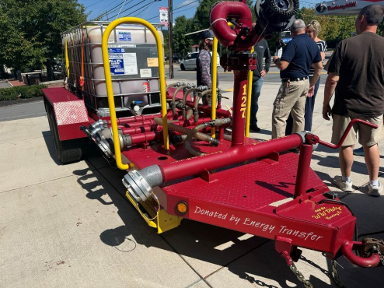
Edwardsville Fire Department, Luzerne County:
Energy Transfer delivered a dedicated foam trailer donation from its nearby Kingston terminal.

Adamsburg & Community Volunteer Fire Department, Westmoreland County:
Our $4,300 grant funded the purchase of a battery-powered positive-pressure ventilation fan. It lets firefighters quickly clear smoke and toxic fumes from structures, reducing heat and improving visibility during emergency responses.
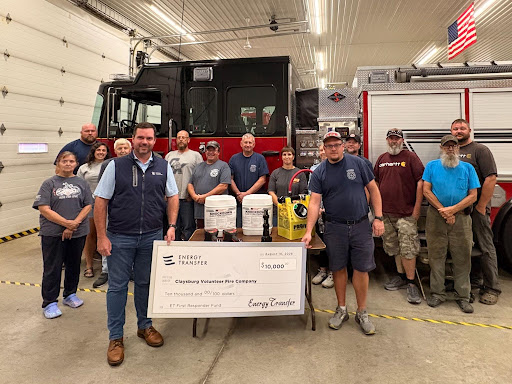
The Claysburg Volunteer Fire Company, Blair County:
Energy Transfer awarded a $10,000 grant to purchase several pieces of equipment designed for both firefighting and rescue activity, which included a state-of-the-art thermal imaging camera to help firefighters locate hot spots and navigate smoke-filled buildings.

Bradford Woods Volunteer Fire Co., Allegheny County:
We provided a $7,164 grant for six low-profile self-contained breathing apparatus air cylinders, giving firefighters lightweight, modern air tanks to protect them in hazardous environments. The fire company also replaced aging and damaged fire hoses.
At the end of the day, every successful rescue comes down to reliable equipment and well-trained people. By helping departments secure updated gear, we hope to play a part in keeping our communities safe and ensuring our first responders get to go home safely after every shift.
If you’d like to learn more about grant eligibility, visit Energy Transfer First Responder Fund page. You can also see more of what we’re doing to support local neighborhoods and schools over on our Converting Energy to Impact page.